By Francesco Cavalli
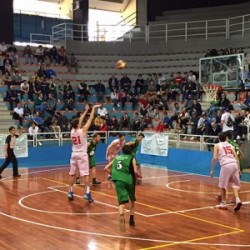
The DNG (Divisione Nazionale Giovanile, the top U19 competition in Italy) Finals will be held in Torino from the 25th to the 31st of May. They will feature sixteen teams: twelve of them where already qualified at the end of the regular season (Olimpia Milano, Pallacanestro Cantù, Elettrogruppo ZeroUno Torino, AS Junior Libertas Casale Monferrato, Reyer Venezia, Aquila BK Trento, U.C. Casalpusterlengo, Virtus Bologna, Stella Azzurra Roma, Officina Fattori Maurizio Pistoia, Virtus Roma, Pallacanestro Palestrina), while sixteen other teams had to play a play-in tournament, the so called Concentramenti Interregionali, which was held in Pesaro from the 20th to the 22nd of April.
With only four more spots available for the final stage, the sixteen teams in Pesaro where split into four groups, the teams winning each group earning a spot for the Finals in Torino.
Group 1
Pallacanestro Biella (3-0), Fortitudo Bologna 103 (2-1), SMG Basket School Latina (1-2), Valdiceppo Basket Perugia (0-3)
Biella was able to grab the first spot thanks to the win in the first game, 57-55 against Fortitudo Bologna, despite missing in the tournament their best player (Luca Pollone - ’97).
Group 2
Blu Orobica Bergamo and CAP Genova (2-1), Poderosa Montegranaro and Basket Rimini Crabs (1-2)
Bergamo, which missed one of their top players (Bruno Silva - ‘96), earned the first spot because of the win in the first game against Genova (60-55). Rimini had a huge opportunity to qualify in the last game, but they blew out a lead late in the game and where outscored by Genova 20-2 in overtime.
Group 3
Victoria Libertas Pesaro (3-0), Basket Pool 2000 Loano (2-1), Latina Basket (1-2), Virtus BK Padova (0-3)
The home team was the one which struggled the less to win his group, even though they had a close game the first day against Loano (68-62).
Group 4
Pallacanestro Reggiana and Aurora Desio (2-1), Viola Reggio Calabria and San Paolo Ostiense Roma (1-2)
Reggio Emilia missed Arturs Strautins (‘98) but they decided to bring in Federico Mussini (‘96), who hadn’t played with the U19 team during the season. Despite the presence of the Italian standout, they were crushed by SPO Roma, the tournament’s Cinderella, and were able to get the first spot only because San Paolo Ostiense threw away a comfortable lead in the last minutes of the last game against Reggio Calabria.
The top prospects of the tournament.
Carl Wheatle (’98, 6’6”, SF/PF, Pallacanestro Biella). The first thing that jumps out watching Wheatle is his impressive frame for a player that young: he has a strong physique with huge wingspan, big hands and excellent athletic tools. He was one of the best defenders in Pesaro, guarding from 1 to 4 on the court. Still being fairly raw on the offensive end, nonetheless he has a natural feel for the game and has shown some significant improvement in his fundamentals. He looks comfortable with the ball despite having to further improve his ball-handling skills, particularly with his off hand, and looks pretty crafty in attacking the rim, being able to easily change direction. Cuts and offensive rebounding account for a good amount of his scoring as well, while his post game is still in the making and his outside shot is fairly inconsistent, needing to work on his shooting mechanics. Overall he was a key factor for Biella, particularly in the last game against SMG Basket School, and his IQ, feel for the game and passing instincts are pretty impressive considering his relatively poor basketball background.
Sandro Mamukelashvili (’99, 6’8”, SF, Pallacanestro Biella). The lefty Georgian player was not yet at 100% after coming back from the knee injury which kept him to play at JBC in Zagreb. Anyway, he had a great tournament and prove once again to be one of the best shooters in Italian youth basketball scene; in the pivotal game against Fortitudo Bologna, he scored 22 points and shot 5/7 from beyond the arc, including the last basket of the game. In Pesaro he still played mostly off the ball and in spot-up situations, surely the best game for him at this stage of his development, but had as well some flashy plays off the dribble and in transition. He has to improve his rebounding tools, an area in which he has good instincts but poor fundamentals, and therefore he’s a better offensive rebounder than a defensive one: on defensive boards he rarely blocks out his man, seems to be not physical enough in searching contact and has always the tendency to focus on the ball instead of on his man. He had also some trouble on defense, being too upwards with his knees and struggling a bit on the first step, but has excellent mobility and coordination.
Leonardo Candi (’97, 6’3”, PG, Fortitudo Bologna 103). One of the best shooters among guards and also one of the best passers in Pesaro. Candi is a long point guard with huge leadership and passing skills, who can see the court, move the ball and make the right pass with perfect timing, regularly hitting the weak side shooter. He’s a deadly shooter with his feet set, but can also move off the ball and shoot off screens. He has an excellent pull-up shot both from mid-range and from beyond the arc, and can regularly hit it on pick-and-roll plays. The main concern about him is that he often settles on jumpers and doesn’t attack the rim, despite probably being more athletic than he’s credited with and having good ball-handling skills.
Lorenzo De Zardo (’99, 6’6”, PG/SG, SMG Basket School Latina). Along with Mamukelashvili, De Zardo was the player with the highest upside at the tournament: he’s a legit 6’6” lefty combo-guard, probably better suited as a point guard. He has huge wingspan, a well-built frame to which he could easily add some weight and quick feet to stay with most of guards on defense. He has strong first step and he’s a quick, strong full-court runner with the ability to get all the way to the rim and finish through contacts. His ball-handling is not flashy but solid, has good crossover, can handle, pass and score with both hands, has solid shooting mechanics. He’s at his best when can play at fast pace and run the transition, but at this point he’s extremely raw and wild in his decision making and he’s not always comfortable in playing half-court basketball. He’s a bit turnover prone and has the tendency to look for difficult passes, his shot selection is still average at best and he’s streaky as a shooter, when the pace get slower he can struggle to create and get prone to force the issue.
Nicholas Dessì (’98, 6’6”, SF, Blu Orobica Bergamo). Dessì is not as talented as other prospects in this list, but has useful tools that could make him an interesting player. He’s not going to blow you away with flashy plays, nor is going to have a primary role on offense in his team, but despite being sometimes too shy and nice on the court he’s a smart and mature player who plays within his limits, knows what to do on the court and is not afraid in taking responsibilities. His main potential appears to be on the defensive end: he has a good frame to fill up and good wingspan, can guard most of wing players and at this level of competition he has to play defense even on some power forward. He lacks the ball-handling skills to create off the dribble, but he’s an excellent spot-up shooter from beyond the arc, with a high release and good spin on the ball. He could easily evolve into a solid 3&D player.
Michele Serpilli (’99, 6’7”, SF, Victoria Libertas Pesaro). Unconventional shooting mechanics don’t keep Serpilli from being one of the most effective shooters at the U19 level. He’s a deadeye shooter off the catch, both with his feet set and off screens, and has natural feel for the basket. In his team he has to play a good amount of minutes at the 4, having a good frame with large shoulders which allows him to physically compete with big men he usually finds at this level of competition; but he looks to have good ball skills, passing tools and feel for the game, and could probably play a bit more off the dribble and shoot more pull-up shots. The main concern with Serpilli is his low motor and lack of toughness: he doesn’t appear always willing to compete, has the tendency to go away from physical contact and looks like he’s always playing at the same pace. He has also to improve a lot on the defensive end of the court, where he struggles badly to defend the first step and has the tendency to get pushed too easily.
Brandon Solazzi (’97, 6’2”, SG/PG, Victoria Libertas Pesaro). He’s a combo-guard, surely more suited for the shooting guard spot at this point of his development. Despite being undersized (somewhere between 6’2” and 6’3” tall) and needing to add weight to his body, he has great physical and athletic skills, has long arms, is really quick with the ball and has a strong first step. He’s able to easily beat his man off the dribble and get to the rim, has huge elevation on his shot and is a tremendous transition scorer, both running the play or filling the lanes. He has a strange shooting mechanic, but is able to comfortably hit threes with his feet set. He can post up against opposing guards, he’s physical despite being undersized and has great fundamentals in using his pivot foot. He has scorer instincts: has to improve his shot selection and playmaking skills, has average court vision and keeps too much the ball in his hands.
Federico Mussini (’96, 6’0”, PG, Pallacanestro Reggiana). As we said, in Pesaro he played for the first time with the U19 team, and the day before the start of the tournament he played in Pistoia with the Serie A team. In the first game against Reggio Calabria, he checked into the game halfway through the first quarter, and in about 5 minutes he scored 16 points, shooting 4/4 on threes, 1/1 on twos and 2/2 from the free throw line. His shooting percentage normalized over the tournament, and he had a particularly tough game against SPO Rome (which indeed Reggio Emillia lost) with a bad shooting night and a couple of bad turnovers in the last quarter. But generally speaking he had a solid tournament, showing great court vision, passing skills and willingness to set his teammates up; and he also showed willingness to play physical despite his light frame, with a solid effort on defense and some efficient drive to the rim to draw contact.
Ion Lupusor (’96, 6’8”, PF, Viola Reggio Calabria). The Italian-Moldovan player was by far the best big man and the top scorer of the tournament. Lupusor is a really physical player with a strong physique, who loves to play through contact. He’s quick and has impressive ball-handling skills for a player his size, and is virtually unstoppable when attacking the rim off the dribble, being able to easily change direction, dribble and score with both hands while slashing and finishing through contacts and drawing fouls at an impressive rate. He’s a solid shooter, particularly off the catch, with range behind the three point line. He’s capable to score in the post, always fighting for position and showing soft touch with both hands and solid pivot foot fundamentals. Has really quick feet on defense, and sometimes played even at the top of the zone. He has the tendency to drive even in a crowded paint, has to improve his pull-up shot and particularly he has to learn how to stay away from foul troubles, being often overaggressive and looking too much for the ball.
Eugenio Amanti (’96, 6’7”, C, San Paolo Ostiense Roma). This undersized big man, who stands somewhere between 6’7” and 6’8”, was probably the top rebounder and shot blocker in Pesaro. Amanti, who this season trained also with Stella Azzurra, is a tough and physical player who always fights for position in the paint and constantly works on sealing his man in the post. He has impressive offensive rebounding instincts and sense of position, being able to push his defender and get into the right spot with timing. He can score with his back to the basket, using properly his pivot foot and showing soft touch with both hands, and he’s a great pick-and-roll player who makes physical screens, has quick feet and good balance and coordination to get the pass on the run. His passing as well looks above average and he’s a centrepiece in his team’s Princeton Offense. In Pesaro he hit a couple of open shots and looked solid from the free throw line, but he needs to work a lot on his shooting range and shooting mechanics. He’s undersized and hasn’t above average leaping ability, but his game has some trait which could translate pretty well to a higher level of competition.
Photo: FIP.IT