By Pietro Cristofori
The B Division of the U16 EuroBasket has always been a breeding ground for hidden gems, giving young talents the chance to emerge and begin their journey in FIBA competitions.
Over the years, many players who now compete in the NBA or EuroLeague first showcased their potential in this very event. This year was no exception, as the talent level proved exceptionally high, with several intriguing prospects to follow: some coming from unexpected national teams.
In the end, Poland grabbed the gold medal over Belgium, as both of these national teams are returning to the A Division after a brief stint in the B Division. The third team moving up is the Czech Republic, which boasted good size and depth. The Czechs defeated the biggest surprise of the event, Portugal, in the 3rd Place Game. Portugal, thanks to its energy and determination, had fought its way all the way to the medal game.
Beyond the team results, several young players distinguished themselves through their skills, athleticism, and potential. The following article provides an analysis of the top prospects from this year’s B Division.
Ten Standouts
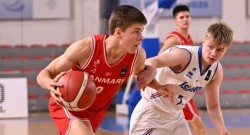
Gustav Drejer - 2009 - 6’6” - Forward - Denmark - Værløse Basketball Klub (DEN)
Drejer was the leader and most mature player on a Danish team that had overall high-end talent. The 6'6" forward had a standout tournament in Skopje, which recalls — in both location and category — the one his brother, Frederik, had back in 2022. Gustav is a different player: he’s not as big, but what stands out in his game is his toughness and athleticism. A relentless slasher, he gets to the rim at will at this stage. His body is defined, not yet fully filled in, but the muscles are there and ready to develop. Overall, he has a powerful and athletic frame. The 6’6” forward is a leader on the floor. Consistently focused throughout the game, he plays with energy and motor on both ends. During the tournament, he struggled from the free-throw line (59%) and had inconsistent showings from deep (27.0% on 4.6 attempts per game), but his production in the paint was remarkable. He needs to control his energy better, but he will get there.
Toni Garma - 2010 - 6’5” - Forward - Croatia - Real Madrid (ESP)
Arguably the finest talent in the event, Garma has one of the smoothest shooting mechanics in youth basketball. His frame is still developing: he doesn’t yet have body hair and still has a baby face. Garma projects to grow a couple of inches more at least, since his father, former pro player Nikola Garma, is 6’7”. His motor skills are not yet advanced, looking similar to a couple of years ago. He doesn’t have the power to outplay opponents physically, but he uses his skillset to get by defenders. He excels at playing through contact, operates at his own pace, and slows down the tempo at will. An effortless shooter, he can already be efficient from NBA range (33.3% from 3 in the event on 7.3 attempts per game). He also gets to his spots in the mid-range, where he executes pull-ups with both hands, showing good rhythm and touch. He has a leader’s personality, always keeping his head high. Since Croatia failed to qualify for Division A, Garma will most likely compete in Division B again next year.
Marek Houska - 2009 - 6’5” - Small Forward - Czech Republic - Decin (CZE)
Son of former pro player Jakub Houska (6’9”), Marek is a skinny forward with plenty of room to grow. A late bloomer, he has added significant inches over recent seasons. With natural feel for the game and high-end talent, Houska is a versatile left-handed forward who brings a notable offensive skillset to the table. He was the undisputed leader of the team and often acted as the primary handler, showing legitimate ball-handling ability. He can play the pick&roll, delivering good passes to teammates. He doesn’t force much and his playstyle is mature for his age. He’s partly able to compensate for his lack of strength with his talent. His body will fill in: he has long arms and big feet. Long-term, he projects as a Swiss-army knife forward, capable of passing and shooting fluidly. At the moment, shooting is his main skill: he is a smooth shooter, also from well beyond the 3-point line, whether in spot-ups or pull-ups. On this team, he had the license to do whatever he wanted. A high-end talent who projects as the next big thing for Czech basketball.
Benjamin Kuranovic - 2010 - 6’7” - Power Forward - Austria - FCN Wels (AUT)
Kuranovic was the main performer on an Austrian team that struggled for much of the event but ultimately avoided relegation to Division C. The main bright spot was Kuranovic, a 2010-born, 6’7” power forward with a skillset more typical of a wing. His size is impressive: he currently stands at 6’7”, but there’s a strong chance he will grow more, as his body is not yet mature and still disproportionate. He is an above-average passer with good feel for the game. Throughout the event, he showed some flashy passes and fluid handles that will definitely allow him to project as a skilled PF at the pro level. It’s uncommon to see a player of his size and age with this kind of talent. He also has good attitude and personality, putting big effort into everything he does.
Diar Libusha - 2009 - 6’6” - Forward - Kosovo - KB Borea (KOS)
Libusha made a strong impression in the event, despite not putting up flashy stats. The 6’6” forward is elegant and versatile, with good size for his role and position. His muscles are still undeveloped and his shoulders are narrow, but the game comes natural to him: he has a smooth, effortless playstyle. He handles the ball with ease, showing coordination and feel to make plays happen. In the best-case scenario, he could develop into a wing at the next level. He is far more comfortable with the ball in his hands. At the moment, he’s inefficient, as he doesn’t yet know how to fully harness his talent. His frame requires significant physical development in order for him to be competitive at the level his skillset suggests. He should also play with more competitiveness and energy. He reminds of a less athletic version of Neoklis Avdalas.
August Engelhardt Møller - 2010 - 6’9” - Power Forward - Denmark - Falcon (DEN)
August Møller is the younger brother of Marcus, a recent Michigan commit in the 2026 class. The 2010-born forward is a totally different player than his brother, much like the “Drejer brothers” case. August is a high-motor 6’9” power forward with an athletic and potentially muscular frame. His lower body is already well-developed, giving him good momentum when running the floor. His upper body still needs to be built, but with wide shoulders, he has the potential to fill out. He’s not afraid of contact and has good size for the position. His motor, athleticism, and fluidity make him a natural fit at the 4 long term. Møller struggles with making reads off the dribble and isn’t comfortable in face-up situations in the half court, but he has all the tools to grow into a full-time PF at the pro level. His energy and motor are remarkable, proven by his tournament double-double average (14 points + 11 rebounds per game). He can’t shoot yet, but he can switch onto the perimeter: his low center of gravity and good mobility let him defend smaller players. He needs to refine certain skills to become a full-time PF at the next level, but he has the potential to get there.
Miguel Sousa - 2009 - 6’10” - Center - Portugal - Valencia Basket (ESP)
All-Tournament Team nominee, Miguel Sousa had the most appealing frame among big men in the tournament. Standing at 6’10” with a long wingspan and NBA-level athleticism, he looks like the next big prospect from Portugal after Neemias Queta and Ruben Prey. Still very raw, Sousa nevertheless has all the tools to become a high-level pro at the 5. He has the size, motor, quickness, and athleticism to be a rim-running big. His lower body has great potential: strong already despite undeveloped muscles. His center of gravity is well-placed, and his feet are extremely quick. As expected, he still doesn’t know how to fully use his body and athletic tools, so he doesn’t consistently create advantages on offense, but his physical momentum is impressive. He can’t shoot. Offensively, he lives in the paint: he’s active, calls for the ball, and finishes through contact. A good rebounder, though he doesn’t always catch the ball strongly — it sometimes looks like it stays too much on his fingertips. A remarkable shot-blocker, he combines quick hands with good timing, and he was by far the best rim protector in the competition (3.4 BPG). With NBA potential, Sousa will face a very intense season with Valencia’s youth program.
Imran Subasic - 2009 - 6’5” - Small Forward - Bosnia and Herzegovina - Dubai BC (UAE)
A recent Dubai BC signee, Imran Subasic showcased his scoring instincts in Skopje. Despite unorthodox shooting mechanics, the 6’5” forward is a three-level scorer with plenty of physical room to develop. Subasic has had a significant growth spurt in recent seasons, and it’s reasonable to expect him to add another couple of inches, potentially becoming a 6’7” forward. He has decent athleticism and length, but still needs to fill in and add kilos. He’s a broad-shouldered forward with a strong torso and decent footwork for his size. In the event, he was an efficient scorer at the rim: he hides the ball well and gets by defenders with ease, showing good touch. A creative scorer, his current comfort zone is behind the arc, where he can operate in multiple sets: off screens, in pull-ups, etc. He’s a streaky shooter and was inefficient from deep in the tournament. Still, he has good basketball IQ and projects as a scoring small forward at the next level.
Lucas Troels Smith - 2009 - 6’7” - Power Forward - Denmark - Zentro Basket (ESP)
In Skopje, Troels Smith continued the positive trend of performances he started last season. The 6’7” power forward brings an intriguing mix of size and skill. Questionable athleticism remains the main concern in his game, though his wingspan is decent. His body is not yet mature, but he already has legitimate strength and knows how to use his frame when attacking downhill. At this level, he gets by using his power, but long term his game will likely translate more to the perimeter, as his physical advantage will gradually be reduced. He is already a reliable shooter, showing very good spin and rhythm on his shots. His mechanics are fluid and clean. His shooting ability is what will set him apart from most of the competition. Smart and efficient, he moves well off the ball and makes good decisions. He also fits naturally into a system as a role player and can pass the ball. In the long run, he projects as a stretch power forward: a role he is already starting to embrace.
Luka Ukic - 2010 - 5’11” - Point Guard - Croatia - Split (CRO)
Ukic stepped up as the main floor general in the event, despite being one year younger than most of the competition. The late-blooming 5’11” PG is the son of former pro player Roko Ukic, who also served as head coach of this U16 Croatia National Team. Luka is a natural PG with long arms and big hands, though he hasn’t had his main growth spurt yet. His body is still skinny and raw, which impacts his game in many ways. With his current build, it’s impressive that he can already compete at this level — but he manages because he sees the game before everyone else and stays constantly active. Given his frame, he struggles to consistently finish at the rim against stronger defenders, but he has good touch and feel around the basket, which should translate at higher levels. A great passer, he doesn’t have the size to see over defenders, but always finds a way to make plays happen. He’s poised and has good body language. He shot poorly from three in the tournament (21.3%), but that should improve as he matures physically. A poised floor general and natural leader.
Other Notes
Poland’s deep roster
Poland returned to Division A after last year’s relegation, fielding one of the most physical teams in the tournament, though they missed 6’5” wing Benjamin Obem due to an ACL injury. The team featured two All-Tournament selections: 6’7” forward Hubert Swirydowicz and 6’11” big Lukasz Lysek. Swirydowicz impressed with his athleticism and fluidity; currently a 4, he has the potential to shift to a 3 long-term if he develops his skills. He struggles with shooting, relies heavily on physicality, and needs to improve decision-making and his face-up game, but his motor and dynamism stood out, making him Poland’s top prospect. Lysek made a bigger impact in the later stages of the tournament, showcasing solid size, toughness, impressive timing for rebounds, and playmaking in the paint. While his ball-handling is limited, his lanky, long frame suggests high long-term potential. Other notable prospects included 6’4” guard Jan Grzesiak, a skilled and smart player with solid size, and 6’9” big Fabian Syrzycki, a lanky, athletic, and dynamic presence.
Talented Belgium’s backcourt
Aaron Ona Embo earned MVP honors thanks to dominant performances throughout the tournament. The undersized PG is a true floor-general with a strong mix of talent and attitude, supported by 6’5” wing Max van de Keere, who combines size, shooting, athleticism, and motor, projecting as a high-level pro wing in modern European basketball. Guard Ilhan David (6’2”) added energy and size but was inconsistent over long minutes. Forward Tom Kasongo (6’6”) averaged 13.9 PPG and 9.3 RPG, standing out as Belgium’s most physically impactful player. Kasongo is a naturally-gifted athlete who runs the floor and makes plays, but he must improve his shooting, consistency, and decision-making to reach his full potential.
Surprising Portugal’s Run
Portugal achieved its best-ever finish in the competition, largely thanks to the relentless energy and attitude the team displayed throughout the tournament. Beyond Miguel Sousa — instrumental in their success and deservedly named to the All-Tournament Team — Christian Correia emerged as another key contributor. The 6’8” big man played with great effort and motor, while also showcasing a solid skill set. Physically, he already possesses a mature frame, and with his broad shoulders and muscular build, he should be able to add strength and mass with ease. Alongside these two frontcourt anchors, Portugal relied on a deep group of dynamic, high-intensity guards who were essential in making this historic achievement possible.
The B Division of the U16 EuroBasket has always been a breeding ground for hidden gems, giving young talents the chance to emerge and begin their journey in FIBA competitions.
Over the years, many players who now compete in the NBA or EuroLeague first showcased their potential in this very event. This year was no exception, as the talent level proved exceptionally high, with several intriguing prospects to follow: some coming from unexpected national teams.
In the end, Poland grabbed the gold medal over Belgium, as both of these national teams are returning to the A Division after a brief stint in the B Division. The third team moving up is the Czech Republic, which boasted good size and depth. The Czechs defeated the biggest surprise of the event, Portugal, in the 3rd Place Game. Portugal, thanks to its energy and determination, had fought its way all the way to the medal game.
Beyond the team results, several young players distinguished themselves through their skills, athleticism, and potential. The following article provides an analysis of the top prospects from this year’s B Division.
Ten Standouts
Gustav Drejer - 2009 - 6’6” - Forward - Denmark - Værløse Basketball Klub (DEN)
Drejer was the leader and most mature player on a Danish team that had overall high-end talent. The 6'6" forward had a standout tournament in Skopje, which recalls — in both location and category — the one his brother, Frederik, had back in 2022. Gustav is a different player: he’s not as big, but what stands out in his game is his toughness and athleticism. A relentless slasher, he gets to the rim at will at this stage. His body is defined, not yet fully filled in, but the muscles are there and ready to develop. Overall, he has a powerful and athletic frame. The 6’6” forward is a leader on the floor. Consistently focused throughout the game, he plays with energy and motor on both ends. During the tournament, he struggled from the free-throw line (59%) and had inconsistent showings from deep (27.0% on 4.6 attempts per game), but his production in the paint was remarkable. He needs to control his energy better, but he will get there.
Toni Garma - 2010 - 6’5” - Forward - Croatia - Real Madrid (ESP)
Arguably the finest talent in the event, Garma has one of the smoothest shooting mechanics in youth basketball. His frame is still developing: he doesn’t yet have body hair and still has a baby face. Garma projects to grow a couple of inches more at least, since his father, former pro player Nikola Garma, is 6’7”. His motor skills are not yet advanced, looking similar to a couple of years ago. He doesn’t have the power to outplay opponents physically, but he uses his skillset to get by defenders. He excels at playing through contact, operates at his own pace, and slows down the tempo at will. An effortless shooter, he can already be efficient from NBA range (33.3% from 3 in the event on 7.3 attempts per game). He also gets to his spots in the mid-range, where he executes pull-ups with both hands, showing good rhythm and touch. He has a leader’s personality, always keeping his head high. Since Croatia failed to qualify for Division A, Garma will most likely compete in Division B again next year.
Marek Houska - 2009 - 6’5” - Small Forward - Czech Republic - Decin (CZE)
Son of former pro player Jakub Houska (6’9”), Marek is a skinny forward with plenty of room to grow. A late bloomer, he has added significant inches over recent seasons. With natural feel for the game and high-end talent, Houska is a versatile left-handed forward who brings a notable offensive skillset to the table. He was the undisputed leader of the team and often acted as the primary handler, showing legitimate ball-handling ability. He can play the pick&roll, delivering good passes to teammates. He doesn’t force much and his playstyle is mature for his age. He’s partly able to compensate for his lack of strength with his talent. His body will fill in: he has long arms and big feet. Long-term, he projects as a Swiss-army knife forward, capable of passing and shooting fluidly. At the moment, shooting is his main skill: he is a smooth shooter, also from well beyond the 3-point line, whether in spot-ups or pull-ups. On this team, he had the license to do whatever he wanted. A high-end talent who projects as the next big thing for Czech basketball.
Benjamin Kuranovic - 2010 - 6’7” - Power Forward - Austria - FCN Wels (AUT)
Kuranovic was the main performer on an Austrian team that struggled for much of the event but ultimately avoided relegation to Division C. The main bright spot was Kuranovic, a 2010-born, 6’7” power forward with a skillset more typical of a wing. His size is impressive: he currently stands at 6’7”, but there’s a strong chance he will grow more, as his body is not yet mature and still disproportionate. He is an above-average passer with good feel for the game. Throughout the event, he showed some flashy passes and fluid handles that will definitely allow him to project as a skilled PF at the pro level. It’s uncommon to see a player of his size and age with this kind of talent. He also has good attitude and personality, putting big effort into everything he does.
Diar Libusha - 2009 - 6’6” - Forward - Kosovo - KB Borea (KOS)
Libusha made a strong impression in the event, despite not putting up flashy stats. The 6’6” forward is elegant and versatile, with good size for his role and position. His muscles are still undeveloped and his shoulders are narrow, but the game comes natural to him: he has a smooth, effortless playstyle. He handles the ball with ease, showing coordination and feel to make plays happen. In the best-case scenario, he could develop into a wing at the next level. He is far more comfortable with the ball in his hands. At the moment, he’s inefficient, as he doesn’t yet know how to fully harness his talent. His frame requires significant physical development in order for him to be competitive at the level his skillset suggests. He should also play with more competitiveness and energy. He reminds of a less athletic version of Neoklis Avdalas.
August Engelhardt Møller - 2010 - 6’9” - Power Forward - Denmark - Falcon (DEN)
August Møller is the younger brother of Marcus, a recent Michigan commit in the 2026 class. The 2010-born forward is a totally different player than his brother, much like the “Drejer brothers” case. August is a high-motor 6’9” power forward with an athletic and potentially muscular frame. His lower body is already well-developed, giving him good momentum when running the floor. His upper body still needs to be built, but with wide shoulders, he has the potential to fill out. He’s not afraid of contact and has good size for the position. His motor, athleticism, and fluidity make him a natural fit at the 4 long term. Møller struggles with making reads off the dribble and isn’t comfortable in face-up situations in the half court, but he has all the tools to grow into a full-time PF at the pro level. His energy and motor are remarkable, proven by his tournament double-double average (14 points + 11 rebounds per game). He can’t shoot yet, but he can switch onto the perimeter: his low center of gravity and good mobility let him defend smaller players. He needs to refine certain skills to become a full-time PF at the next level, but he has the potential to get there.
Miguel Sousa - 2009 - 6’10” - Center - Portugal - Valencia Basket (ESP)
All-Tournament Team nominee, Miguel Sousa had the most appealing frame among big men in the tournament. Standing at 6’10” with a long wingspan and NBA-level athleticism, he looks like the next big prospect from Portugal after Neemias Queta and Ruben Prey. Still very raw, Sousa nevertheless has all the tools to become a high-level pro at the 5. He has the size, motor, quickness, and athleticism to be a rim-running big. His lower body has great potential: strong already despite undeveloped muscles. His center of gravity is well-placed, and his feet are extremely quick. As expected, he still doesn’t know how to fully use his body and athletic tools, so he doesn’t consistently create advantages on offense, but his physical momentum is impressive. He can’t shoot. Offensively, he lives in the paint: he’s active, calls for the ball, and finishes through contact. A good rebounder, though he doesn’t always catch the ball strongly — it sometimes looks like it stays too much on his fingertips. A remarkable shot-blocker, he combines quick hands with good timing, and he was by far the best rim protector in the competition (3.4 BPG). With NBA potential, Sousa will face a very intense season with Valencia’s youth program.
Imran Subasic - 2009 - 6’5” - Small Forward - Bosnia and Herzegovina - Dubai BC (UAE)
A recent Dubai BC signee, Imran Subasic showcased his scoring instincts in Skopje. Despite unorthodox shooting mechanics, the 6’5” forward is a three-level scorer with plenty of physical room to develop. Subasic has had a significant growth spurt in recent seasons, and it’s reasonable to expect him to add another couple of inches, potentially becoming a 6’7” forward. He has decent athleticism and length, but still needs to fill in and add kilos. He’s a broad-shouldered forward with a strong torso and decent footwork for his size. In the event, he was an efficient scorer at the rim: he hides the ball well and gets by defenders with ease, showing good touch. A creative scorer, his current comfort zone is behind the arc, where he can operate in multiple sets: off screens, in pull-ups, etc. He’s a streaky shooter and was inefficient from deep in the tournament. Still, he has good basketball IQ and projects as a scoring small forward at the next level.
Lucas Troels Smith - 2009 - 6’7” - Power Forward - Denmark - Zentro Basket (ESP)
In Skopje, Troels Smith continued the positive trend of performances he started last season. The 6’7” power forward brings an intriguing mix of size and skill. Questionable athleticism remains the main concern in his game, though his wingspan is decent. His body is not yet mature, but he already has legitimate strength and knows how to use his frame when attacking downhill. At this level, he gets by using his power, but long term his game will likely translate more to the perimeter, as his physical advantage will gradually be reduced. He is already a reliable shooter, showing very good spin and rhythm on his shots. His mechanics are fluid and clean. His shooting ability is what will set him apart from most of the competition. Smart and efficient, he moves well off the ball and makes good decisions. He also fits naturally into a system as a role player and can pass the ball. In the long run, he projects as a stretch power forward: a role he is already starting to embrace.
Luka Ukic - 2010 - 5’11” - Point Guard - Croatia - Split (CRO)
Ukic stepped up as the main floor general in the event, despite being one year younger than most of the competition. The late-blooming 5’11” PG is the son of former pro player Roko Ukic, who also served as head coach of this U16 Croatia National Team. Luka is a natural PG with long arms and big hands, though he hasn’t had his main growth spurt yet. His body is still skinny and raw, which impacts his game in many ways. With his current build, it’s impressive that he can already compete at this level — but he manages because he sees the game before everyone else and stays constantly active. Given his frame, he struggles to consistently finish at the rim against stronger defenders, but he has good touch and feel around the basket, which should translate at higher levels. A great passer, he doesn’t have the size to see over defenders, but always finds a way to make plays happen. He’s poised and has good body language. He shot poorly from three in the tournament (21.3%), but that should improve as he matures physically. A poised floor general and natural leader.
Other Notes
Poland’s deep roster
Poland returned to Division A after last year’s relegation, fielding one of the most physical teams in the tournament, though they missed 6’5” wing Benjamin Obem due to an ACL injury. The team featured two All-Tournament selections: 6’7” forward Hubert Swirydowicz and 6’11” big Lukasz Lysek. Swirydowicz impressed with his athleticism and fluidity; currently a 4, he has the potential to shift to a 3 long-term if he develops his skills. He struggles with shooting, relies heavily on physicality, and needs to improve decision-making and his face-up game, but his motor and dynamism stood out, making him Poland’s top prospect. Lysek made a bigger impact in the later stages of the tournament, showcasing solid size, toughness, impressive timing for rebounds, and playmaking in the paint. While his ball-handling is limited, his lanky, long frame suggests high long-term potential. Other notable prospects included 6’4” guard Jan Grzesiak, a skilled and smart player with solid size, and 6’9” big Fabian Syrzycki, a lanky, athletic, and dynamic presence.
Talented Belgium’s backcourt
Aaron Ona Embo earned MVP honors thanks to dominant performances throughout the tournament. The undersized PG is a true floor-general with a strong mix of talent and attitude, supported by 6’5” wing Max van de Keere, who combines size, shooting, athleticism, and motor, projecting as a high-level pro wing in modern European basketball. Guard Ilhan David (6’2”) added energy and size but was inconsistent over long minutes. Forward Tom Kasongo (6’6”) averaged 13.9 PPG and 9.3 RPG, standing out as Belgium’s most physically impactful player. Kasongo is a naturally-gifted athlete who runs the floor and makes plays, but he must improve his shooting, consistency, and decision-making to reach his full potential.
Surprising Portugal’s Run
Portugal achieved its best-ever finish in the competition, largely thanks to the relentless energy and attitude the team displayed throughout the tournament. Beyond Miguel Sousa — instrumental in their success and deservedly named to the All-Tournament Team — Christian Correia emerged as another key contributor. The 6’8” big man played with great effort and motor, while also showcasing a solid skill set. Physically, he already possesses a mature frame, and with his broad shoulders and muscular build, he should be able to add strength and mass with ease. Alongside these two frontcourt anchors, Portugal relied on a deep group of dynamic, high-intensity guards who were essential in making this historic achievement possible.
ADVERTISING